
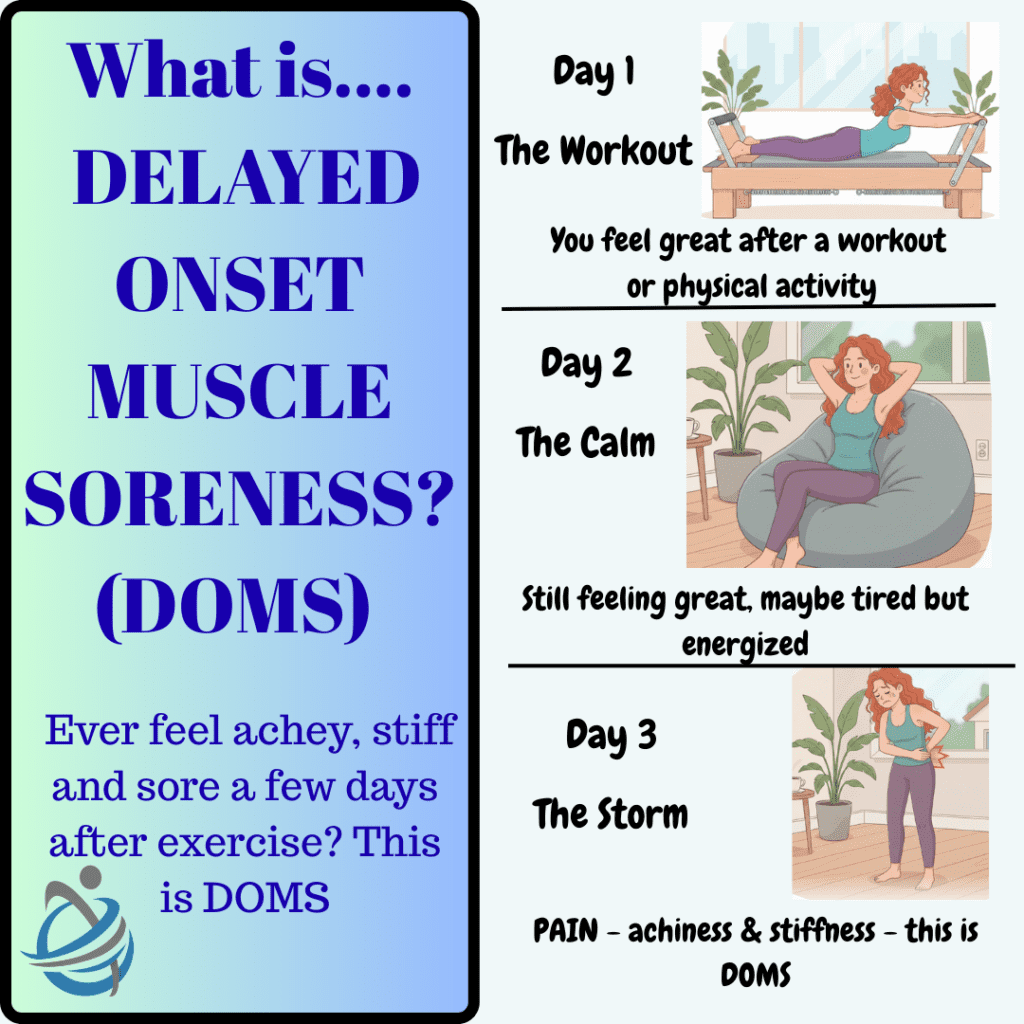
Muscle soreness is a common part of training, especially when starting a new program, increasing intensity, or returning after time off. But not all muscle soreness is the same. Understanding the difference between D.O.M.S – “Delayed Onset Muscle Soreness” and injury-related pain is essential for maintaining consistency, avoiding setbacks, and protecting long-term performance. But there are so many of us who are sadly unaware of this phenomenon. Rest assured DOMS, is a POSITIVE side effect of training. Injury to your muscles is NOT.
Let’s take a look at the difference.
What Is DOMS and Why Muscle Soreness Isn’t Always Bad
DOMS typically develops about 12–48 hours after exercise and is a normal response to training load. This type of muscle soreness is associated with small changes, some think minor tears to your muscle tissue as it adapts to new or increased demands. These minor tears are what help our muscle to grow, and are seen as a normal, POSTIVE physiological effect to training and activity.
Common Features of DOMS include:
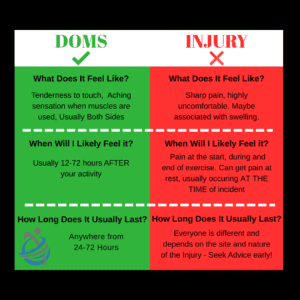
- Generalised muscle soreness or stiffness shortly after exercise
- Tenderness when pressing on the muscle
- Reduced range of motion that improves with movement
- Symptoms that peak and then gradually settle within a few days
- Usually occurs on both side of the body.
- Feels like stiffness, that improves with stretching or light movement
As we said before, this muscle soreness or DOMS is often seen as a positive sign of adaptation especially when training is well-managed. Importantly, it should not significantly worsen with continued light movement and should steadily improve.
When Muscle Soreness Is Actually Pain
Pain related to injury is different from normal muscle soreness. Injury-related pain can occur suddenly or build gradually and is often linked to tissue irritation or damage, such as a muscle strain, tendon issue, or joint overload. This is vastly different to DOMS and can have a greater impact on your body and training if not properly addressed.
Warning signs that muscle soreness may actually be pain include:
- Sharp, stabbing, or localised pain
- Pain during exercise that requires and alteration to your movement or technique due to pain
- Swelling, bruising, or weakness
- Pain that worsens over time instead of improving
- Pain that persists beyond normal DOMS timelines (greater than 12-48 hours)
- can occur suddenly during a movement or exercise session
Unlike DOMS, this type of pain should not be pushed through. Choosing to ignore this type of pain, may lead to further injury and interrupt your training routine and consistency.
Why Early Diagnosis Leads to Better Outcomes

One of the most common mistakes people make is waiting too long to seek help because they assume pain is “just muscle soreness.” The quicker an injury is assessed and diagnosed, the better the outcomes are usually. Seeking help from one of our Glen Iris Osteopath’s is a great way to keep your training on track and get sound advice on a specific treatment plan.
Early treatment allows:
- Accurate identification of the injured tissue or confirmation you may just have muscle soreness
- Appropriate load modification rather than complete rest
- Faster return to training
- Reduced risk of compensation injuries
- Improved confidence and consistency
Seeking treatment early doesn’t mean you have to stop training — it often means learning how to train smarter while healing. Our Osteopaths can also help and give you insight into over training or recovery strategies that will help your training load.
Consistency Is the Key to Long-Term Progress

Training consistency is far more important than pushing through pain. Mismanaging muscle soreness or ignoring early signs of injury often leads to longer time away from training and repeated setbacks. Which no one wants.
By understanding the difference between DOMS and pain, and by seeking professional advice when unsure, you give your body the best chance to recover, adapt, and perform.
When in Doubt, Get It Checked
If you’re unsure whether what you’re feeling is normal muscle soreness or something more, early assessment is the safest and most effective option. Prompt treatment helps keep your training on track, supports long-term progress, and protects your body for the future.
Listening to your body — and acting early — is one of the smartest training decisions you can make.
If you need help, reach out to our Osteopaths, we are here to help.