
How to Reduce Stress, Anxiety and Improve Athletic Performance Right Now!
In the hustle and bustle of daily life, we often overlook the simple act of breathing. However, understanding proper breathing mechanics and harnessing its potential can have profound effects on our stress levels, anxiety, and overall well-being. In this blog, we explore the vital connection between breathing and our body’s systems, how it influences athletic performance, managing stress and anxiety and some simple ways we can alter our breath in everyday life to make real time changes to our physical and mental states.
“Breathing is much more than inhaling oxygen and exhaling carbon dioxide.”
There are a few terms that I would like to explain before you get into this blog. Familiarise yourself with these terms as I use them throughout.
The Glossary:
- Autonomic nervous system – Part of the nervous system that is responsible for all of the bodily functions that we don’t consciously control. Heart rate, digestion, breathing, inflammation, our stress response etc.
- Sympathetic Nervous system – Part of our autonomic nervous system that is responsible for our “fight-or-flight response”. Our response to stress. When this is activated we have increased heart rate, increased blood pressure, increased breath rate, increased stress hormones and blood is biased from our digestive system into our muscles so we are ready to run or fight whatever real or perceived threat is around us.
- Parasympathetic Nervous system – the opposite to the sympathetic nervous system, part of the autonomic nervous system that is responsible for our “rest-and-digest response”. When activated, we have decreased heart rate, decreased blood pressure, decreased breath rate, decreased stress hormones and blood back around our digestive system so we start digesting food and healing cells.
- Vagus nerve – The vagus nerve is a key part of the autonomic nervous system. It is responsible for influencing a lot of our vital bodily functions including heart rate, digestion, respiration, stress response, and immune function.
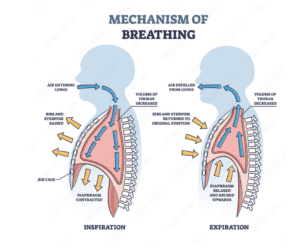
- Diaphragm– The main muscle of our breathing system. Located between the lungs and the abdomen (along the bottom of your rib cage), the diaphragm works by contracting when we breathe in and relaxing as we breathe out. It is the primary breathing muscle and is helped by the intercostal muscles (muscles between your ribs).
- Alternate nasal breathing: a breathing exercise where you block one nostril and breathe in, then switch to the other nostril when you breathe out. Then in through the same nostril and out through the starting nostril. Then repeat. Used to decrease breath rate and stress.
- Box breathing – A breathing exercise where you breathe in, hold your breath, breathe out and then hold your breath all for the same amount of time. For example, breathe in for four seconds, hold at the top for four seconds, breathe out for four seconds, hold at the bottom for four seconds, then repeat. You can do this for as long or as short as you like.
- The Bohr Effect – put simply, the more carbon dioxide we have in our system, the easier our cells have access to oxygen. The less we breathe, the higher carbon dioxide levels we have in our body, the higher carbon dioxide levels we have in our body, the more oxygen we are able to utilise. This can be complicated to understand, proving breathing isn’t as simple as we once thought.
The Link Between Breathing and Stress: 
When we experience physical, mental or emotional stress, our body’s natural response is to activate the sympathetic nervous system, triggering the fight-or-flight response. This response leads to shallow, rapid breathing, which can further exacerbate feelings of stress and anxiety. By consciously adjusting our breathing, we can counteract this response and activate the parasympathetic nervous system, triggering the relaxation response. Deep, slow breaths stimulate the vagus nerve, helping to calm the mind and body and shift us towards our rest-and-digest response.
The faster and shallower we breathe, the more likely we are to experience feelings of our fight-or-flight response (stress and anxiety). The less frequently and deeper we breathe, the more likely we are to experience feelings of our rest-and-digest response.
Breathing and Anxiety:
Anxiety often manifests as racing thoughts, a sense of unease, an increased heart rate, tingling in the hands and/or feet. Fortunately, regulating our breath can significantly alleviate these symptoms. By focusing on diaphragmatic nasal breathing, we are able to combat these symptoms. Taking long slow deep breaths we are breaking the cycle of stress/anxiety. Taking longer, slower breaths allow for greater oxygen consumption and higher levels of carbon dioxide within the bloodstream. While it’s true that increased carbon dioxide levels can be uncomfortable, it actually facilitates a process known as the Bohr Effect (The Bohr Effect | Deranged Physiology) which allows for greater absorption of oxygen by the cells. The enhanced oxygenation promotes relaxation, diminishes anxiety, and enables a clear, focused mind.
 Breathing and the Body’s Systems:
 Breathing and the Body’s Systems:
 Proper breathing mechanics not only impacts stress and anxiety levels but also influences various systems within our bodies. Deep breathing enhances the oxygen supply to our cells, optimizing their functioning and boosting overall energy levels. It supports cardiovascular health by improving circulation and lowering blood pressure. Furthermore, conscious breathing aids in digestion by stimulating the vagus nerve and promoting efficient absorption of nutrients.
Breathing exercises, such as alternate nostril breathing or box breathing, can also strengthen the respiratory system and increase lung capacity. With regular practice, these exercises enhance the efficiency of the respiratory muscles and increase oxygen intake. While the uncomfortable feeling often felt while box breathing or other reduced breathing exercises feels like a lack of oxygen, it is actually an increase in carbon dioxide. These feelings can trigger the urge to take shallow breaths, but it is important to resist this urge and continue deep, intentional breathing. Over time, the body adapts to higher levels of carbon dioxide, leading to better tolerance and improved overall respiratory function.
Breathing and athletic performance:
Breathing techniques not only have a positive impact on stress, anxiety, and overall well-being, but they can also greatly enhance athletic performance. People who incorporate conscious breathing into their training routines experience numerous benefits. Deep, diaphragmatic breaths deliver more oxygen to the muscles, increasing their efficiency and endurance. By regulating the breath during exertion, athletes can maintain optimal oxygen levels and reduce fatigue. People are able to train their bodies to allow higher levels of carbon dioxide, increasing access to oxygen (see Bohr Effect). As their “carbon dioxide tolerance” increases, they are able to work at the same intensity with a lower heart rate, lower breath rate and lower energy expenditure. Moreover, conscious breathing helps athletes stay focused, calm, and in control during high-pressure situations. By harnessing the power of breath, athletes can strive towards their full potential and elevate their performance to new heights.
Easy ways to breathe less:
 The first step in utilising our breath for good is being aware of how we breathe throughout the day. “Breath awareness” is imperative because if we don’t know how we are breathing we are unable to alter it. How do you breathe when stuck in traffic? When stressed at work? When the kids aren’t sleeping? During exercise? If you notice yourself breathing through your mouth, taking shallow breaths and breathing with your shoulders, then you can take steps to change these patterns.
A simple way to implement slower, lower and deeper breathing is to simply breathe through your nose as often as you can. Breathing through your nose, because of the smaller air passages, forces our big breathing muscle, the diaphragm, to contract to get air in. This allows a greater expansion of the chest and abdomen, allowing deeper, more full breaths to be achieved. Try it now, take a big breath in and out through your mouth and then a big one through your nose. You may feel the mouth breath to be fast and high in the chest, while a nasal breath will be slower and lower.
- Breathe through your nose as often as you can/think of it. Turning on a kettle? 10x breaths through the nose. Opening a door? 10x breaths through the nose. Getting in a car? 10x breaths through the nose. Do this as often as you can.
- When walking or other low-level cardio (strength training and jogging) challenge yourself to breathe through your nose throughout the workout. This will add an extra stress to the exercise and help make adaptions faster.
Take Home Point:
In a fast-paced world where stress and anxiety often take centre stage, harnessing the power of proper breathing mechanics can offer a simple yet effective tool for self-care. By becoming aware of our breath, practicing deep, intentional breathing, and incorporating breathing exercises into our daily routine, we can unlock the potential for reduced stress, anxiety, and enhanced overall well-being.
Our Osteopath Kieren has completed a certificate in functional and therapeutic breathwork and has taken a keen interest in how people breathe, and how people can harness the way they breathe to help themselves in most aspects of life.
If you are interested in a breathing class or seminar, please email us at info@equilibriumsas.com.au