

COMMON RUNNING INJURIES!
Having just completed a marathon, I thought I would go into some of the common running injuries I have experienced both myself, and in the clinic with the runners I see. These running injuries are generally all overuse injuries. They are more often than not caused by overloading tissues. That is, to much too soon. Not allowing them to adapt to that extra load we’re placing on them.
If we are looking to get back to running, and help heal these running injuries, initially we need to decrease the load on them. That is settle the pain. The we look to add in strength training. And then slowly increase the loads back to where they were.
Here at Equilibrium Sports and Spinal, we offer Radial Shockwave Therapy. This treatment involves the generation of high intense sound waves known as “shockwaves” to clear inflammation, stimulate muscle and tendon repair and improve blood flow to these injured area’s. It can be extremely effective at helping these overuse injuries in the early stages of treatment and injury management.
I talk to my runners/athletes with these injuries about “24 hour” pain. This is because these injuries can often be warmed up and not feel too bad during the activity but flare up within 24 hours post exercise. If your pain flares up past a 4/10 the next day, that exercise was too much for that tissue at that time. 4/10 pain is a nice barrier to keep ourselves below when dealing with overuse injuries like these.
Here are the top 5 Most common running injuries we see in the clinic:
Achilles Running Pain: 
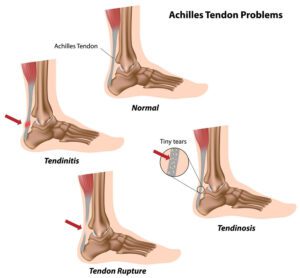
Achilles running pain is a condition that affects the Achilles tendon. This thick strong tendon connects the calf muscles to the heel bone. Symptoms of Achilles running pain include pain and stiffness in the tendon, particularly in the morning or after periods of rest. Often the first 5-10 steps getting out of bed are the hardest and most painful. Strengthening the calf muscles is the first point of call for achilles tendon pain, along with managing load.
Shin Splints:
Shin splints are a common running injury that occur when the muscles and tendons in the shin become inflamed. Symptoms of shin splints include pain and tenderness along the shin bone, most of the time on the inside of the shin bone. A key indicator for shin splints is the “cadence” of which we run, being how many steps we take a minute. Often people with shin splints are taking too few steps a minute. As well as decreasing load and decreasing pain, a common starting point for runners with shin splints is to increase their cadence to 160-180 steps a minute.
Patella Tendon Pain:
Patella tendon pain, also known as jumper’s knee, is a condition that affects the tendon that connects the kneecap to the shin bone. It is typically caused by overuse or repetitive jumping or squatting movements. Symptoms of patella tendon pain include pain and swelling in the front of the knee, particularly after physical activity.
ITB Syndrome:
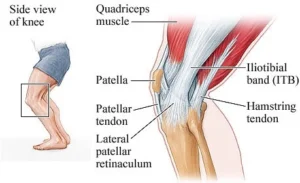
ITB syndrome is a condition that affects the iliotibial band. This is a thick band of tissue that runs along the outside of the thigh. It is typically caused by overuse, weakness or improper running form. It can be exacerbated by lots of downhill running. Symptoms of ITB syndrome include pain and tightness along the outside of the thigh, particularly during physical activity. Treatment options include rest, ice, compression, and physical therapy to stretch and strengthen the affected area.
Plantar Fasciitis: 
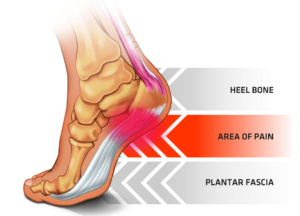
Plantar fasciitis is a condition that affects the sole of the foot and the tissue know as the plantar fascia. This thick band of tissue runs along the bottom of the foot and help support the arch. It is typically caused by overuse or improper footwear. Symptoms of plantar fasciitis include pain and stiffness in the heel, particularly in the morning or after periods of rest. We often see this condition responding extremely well to a specific exercise “loading program” in conjunction with Shockwave Therapy.
Prevention Of Running Injuries:
Although running injuries can never be totally avoided, we can take steps to best prepare our body for the loads of running. Strength training, running mechanics and good shoes are the “low hanging fruit” for the above injuries. Correct recovery is important too, everyone will talk about stretching, foam rolling, ice baths, saunas and massage. They are all great tools. But the three most important recovery tips I could give you are:
- 8+ hours of sleep
- Eating good quality food/water and
- Resting an adequate amount between runs.
I don’t have the specific numbers, but rest, diet and sleep are the bulk of recovery, while the other tools are the “one-percenters”.
There isn’t a specific time that you should rest between runs. I like to advise people that if we are going above that 2-4/10 pain threshold on a run for these types of injuries, we may have to rest a little longer than we are between runs.
Footware:
My advice around shoes for running is to find ones you feel comfortable in. There isn’t the perfect shoe that suits everyone. For most of our training, shoes should be soft and comfortable. You should feel stable in them. They should be replaced every 400-600 km total distance. And having a few to choose from can be a good way to spread the wear. Stores like Active Feet or The Running Company are a great place to start.
Common Running Injury Exercises:
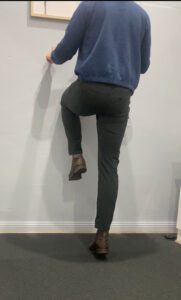
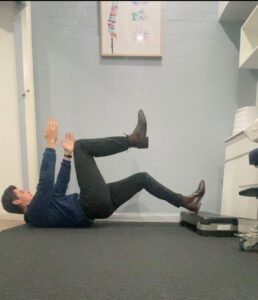
With all of these injuries, I like to start the athlete/runner with isometric holds. These are exercises like a “plank”, where you build tension in an area without moving at all. For achilles, plantar fasciitis and shin splints, I like holding at the top of a calf raise (heel lift). For hamstring tendon pain, a hamstring bridge is a good start and for patella tendon pain a wall sit can be effective. Don’t worry, I’ll attach photos for reference.
Calf Raise Hamstring Bridge Wall Sit

Conclusion:
As a runner, it is important to be aware of the common types of pain that can occur and take steps to prevent and treat these common running Injuries. By practicing proper running form, wearing proper footwear and recovering well, you can help prevent these types of injuries and keep yourself on track to achieving your running goals. If you do experience any of these types of pain, it is important to seek medical attention and follow a proper treatment plan in order to fully recover and prevent further injury.
If you think you need more information, treatment or advice around running/running injuries, come in and see us and we will implement a plan to get you pounding the pavement again.