

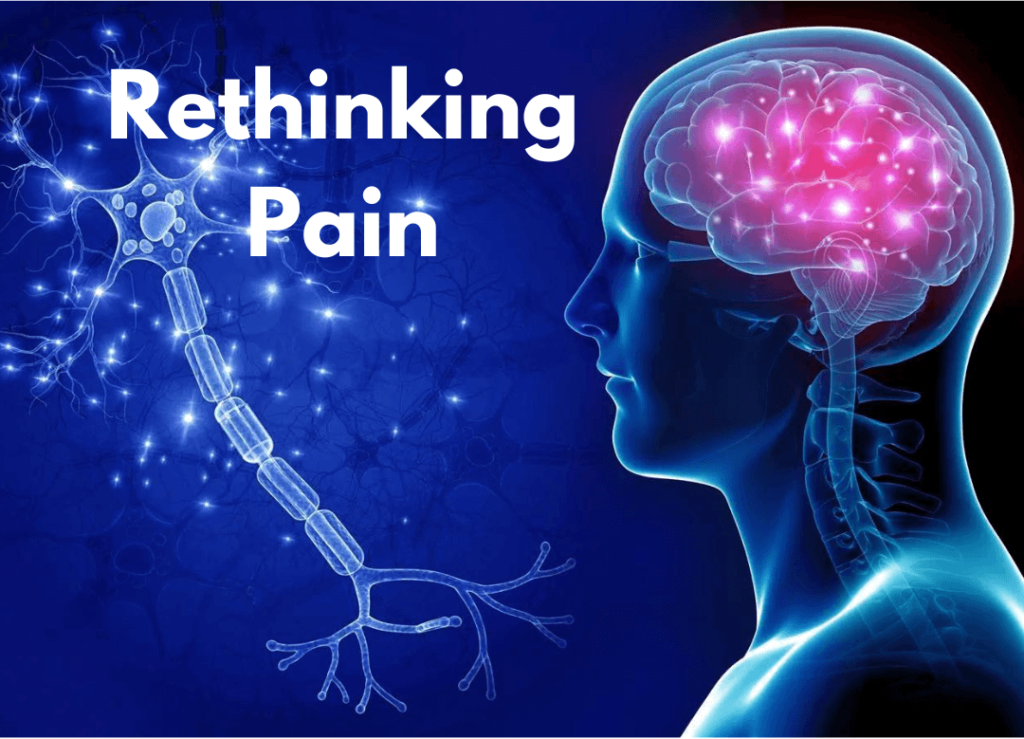
PAIN! Are You Frustrated By It?
Nearly everyone in their life experiences pain. Regardless of your background, your job title, the postcode you live in or whether you’re right or left handed, it is a universal human experience. Low back pain costs the Australian Healthcare system $4.8 billion annually, and 1 in 6 Australians have back pain or problems with their back (painaustralia.org.au)

The International Association for the Study of Pain (IASP) defines pain as, “An unpleasant sensory and emotional experience associated with actual or potential tissue damage, or described in terms of such damage”. This can be hard to wrap your head around, but what I want to draw your attention to is “sensory and emotional” and “actual or potential” terms. These two snippets highlight something for everyone to consider.
Pain is not just related to actual tissue damage, in fact it has quite a poor relationship with the amount of “damage” someone has, which is why they say actual or potential. Pain is also not just a sensory experience, it is influenced a lot by the emotions we experience, as well as influences from cultural, social and historical experiences.
Over the next few blogs I want to discuss some key players in understanding pain, the complexity, and how our experiences, beliefs and cultural/social background play a huge role in our perception of pain.
So here are some of the key concepts or phrases we need to wrap our head around when delving into this topic;
Nociception/Nociceptors: The Nerves That Contribute To Pain.
The nervous systems attempt to alert the brain to what is happening in/to the body.
If someone was to put their hand on a hot surface, the heat would stimulate nerves in the hand that would send signals from the hand to the spinal cord and then up to the brain. These nerves are called nociceptors. They are set off by mechanical, chemical and thermal stimuli (pressure, heat, cold, inflammation, other chemicals). There are different classes of nociceptors for the different stimuli. The stimuli of pressure, heat, cold, inflammation and other chemicals have to reach a certain amount of intensity to trigger the nociceptive nerves. Once the intensity hits a certain threshold, the nerve sends a signal up towards the spinal cord.

FUN FACT – the nociceptors (nerves) that are triggered by heat stimulus are the same nerves that are triggered by the chemicals that make chilli’s hot (capsaicin), that’s why chilli’s feel like they burn. The same goes for cold stimulus and menthol.
Peripheral Sensitisation:
When something is injured, the nerves around the area lower their nociceptive threshold, so they are triggered by lower intensity of signals. This is in an attempt to protect the area. Even nociceptors who don’t normally respond to that type of stimulus can respond to the stimulus, creating increased sensitisation within the area.
For example, if there is a lot of heat stimulus and the heat nociceptors are firing, they can then trigger the pressure and chemical nociceptors to fire even if there aren’t those stimuli, to increase the response to the heat.
Central Sensitisation:
The brain and spinal cords ability to increase and perpetuate, or not turn down the signals going up to the brain. There are nerves within the spinal cord that can stimulate more pathways up to the brain, increasing the nociception (signal) up to the brain. Once those signals get to the brain, the brain also has the ability to turn up or down the signals.
A role of the brain in nociception is to send signals back down the spinal cord to alter the amount of signals coming from the site of injury to the brain. These “descending” signals (down from brain to site injury) have the ability to amplify or quieten the amount of nociceptive signals coming up to the brain.
I’ll leave it there for now. In the next blog we will dive into influences that can affect pain and some strange examples that may make you think differently. Stay tuned….
If you have any specific questions about pain in general, or more specifically your pain, please feel free to reach out to me directly at kieren@equilibriumsas.com.au and I’ll get back to you ASAP.