
Getting back into the gym and avoiding injury after Coronavirus Isolation
Before we pick up the dumbbells once again, we might need to be cautious. During the pandemic, many of us have been more sedentary. When we exercise less, our physical condition declines, which may increase the risk of injury. So how can we return to the gym safely?
What is Deconditioning? 
Humans are bioplastic. That means we respond to what we do with our bodies. Usually, our body responds positively to exercise: we get fitter and stronger, and our mental and physical health improves. When we stop being active, our physical condition declines. This is known as “deconditioning”.
What Are The Risks?
While deconditioning can be rapid, reconditioning the body is slower. Upon returning to the gym we might feel like our muscles are “tighter” and we’re breathing more heavily. We may also feel that our joints are stiff, or that we reach our pain threshold well before we are used to. These are all normal signs that should improve after a few workouts or over several weeks.
But engaging in high-intensity movements or increasing loads too quickly can be a risk for injury. People might assume they can jump back into pre-pandemic exercise without considering the reduced capacity of their bodies.
Research has found novice exercisers and those with lower activity before starting gym-based exercise are more likely to experience an injury on their return to the gym.
Ease into it!
 To prevent this, the recommendation is to ease back into your exercise routine. Consider reducing your intensity or load to 70-80% of your pre-pandemic efforts for a few weeks.
Make sure to use a specific warm-up for the exercise you do.
We also recommend you set realistic goals to allow your body to adjust and to focus on re-establishing healthy habits and routines.
As you ease back into exercise, it is wise to acknowledge everything happening in your life. Factors that may influence our response to exercise are:
- Poor sleep
- stress, nutrition
- alcohol intake
- our history of exercise
- and many other factors can affect our body’s response and risk of injury.
For example, you could lower your expectations for a workout if you’ve had poor sleep recently. Fatigue can lead to poor focus can be a result of fatigue and can be linked with a higher risk of injury. It is therefore important to prioritize sleeping well into your recovery regime.
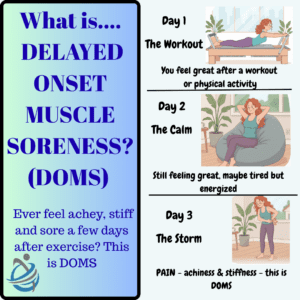
Why am I So Sore?
Common aches and pains have many causes and are not always the result of an injury. Also, complete rest isn’t always the best way to manage them. This is particularly the case for common problems such as back pain.
We often think we should lie on the couch if we have a sore back. But it is often safe and beneficial to continue some activity within your limits while your body heals. If you do feel pain throughout or after exercise, recognize in the majority of cases, your body will heal quickly with no lasting problems. It’s normal for back pain and muscle strains to take a few weeks to resolve.
However, if your pain gets increasingly worse over a few days it’s wise to get it checked out by a health professional.
Remember, the benefits of exercise far outweigh the potential risks when getting back into the gym. Your enthusiasm just needs to be tempered with a realistic view of your current condition, not the memory of your ability three months ago.
Dr. Chris Devenish (Osteopath)
 Chris is a registered osteopath and a level 1 accredited strength and conditioning coach. He is able to provide specific exercise prescription and develop programs to rehabilitate and prevent injuries.