
Shockwave Therapy for Plantar Fasciitis: Does It Work?

ShockWave Therapy

If you have plantar fasciitis, you probably know the routine. Sharp heel pain with your first steps in the morning. Stretches, new shoes, maybe orthotics or a cortisone injection. And yet, months later, the pain is still there.

Shockwave therapy is one of the most researched options for plantar fasciitis that hasn’t settled with standard treatment. Below, our osteopaths explain how shockwave works on the heel, what the research actually shows, who it suits, and what to expect from a course of treatment.

Why does plantar fasciitis hang around?

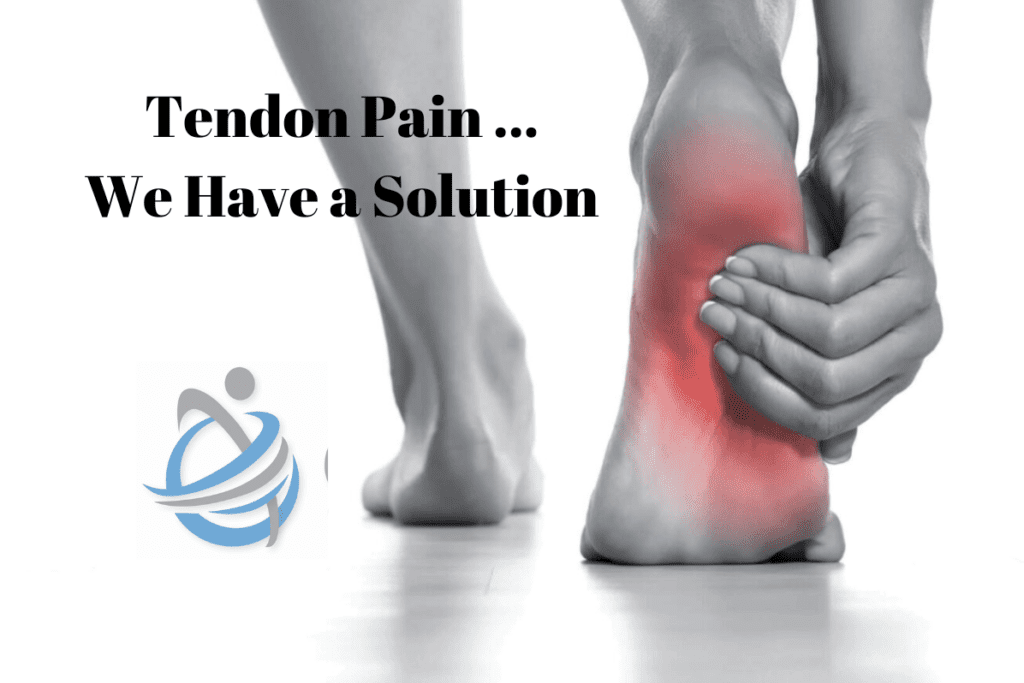
The plantar fascia is a thick band of tissue running from your heel to your toes. It supports your arch and absorbs load every time you stand, walk or run. Plantar fasciitis is irritation of this tissue where it attaches to the heel bone, causing pain under the heel that’s typically worst with the first steps after rest.

Despite the name, long-standing plantar fasciitis is usually less about inflammation and more about a tissue that has stopped healing properly. That’s why anti-inflammatory approaches such as ice, rest and anti-inflammatory tablets often give only short-term relief.

It’s most common in adults aged 40 to 60, runners, and people who spend long hours standing. A recent jump in activity, tight calves and limited ankle movement are common contributors. Our plantar fasciitis page covers causes and general treatment in more detail. Shockwave Therapy and Osteopathy
How does shockwave therapy work for heel pain?

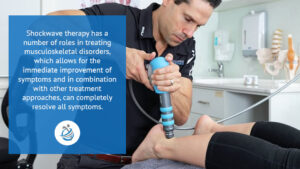
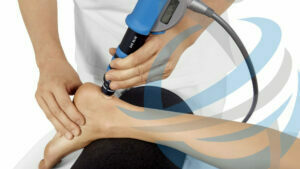
Shockwave therapy, also called extracorporeal shockwave therapy (ESWT), delivers rapid pressure pulses through the skin into the painful area under your heel. At our clinic we use radial shockwave from a Swiss DolorClast device, applied with a hand-held applicator.

The exact mechanisms are still being studied, but shockwave is thought to help in several ways:

  • Restarting the healing response in tissue that has become stuck in a chronic state
  • Increasing blood flow to the area, bringing nutrients needed for repair
  • Reducing pain sensitivity by calming irritated nerve endings around the heel

Pain relief is often felt within a few sessions, while tissue changes continue over the following weeks.

What does the research say?

Shockwave is one of the better-studied treatments for persistent plantar fasciitis, particularly for pain that has lasted three months or more.

  • It reduces pain and improves foot function. A 2022 systematic review of 11 randomised controlled trials, involving 658 people with chronic plantar fasciitis, found moderate evidence that shockwave improves both pain and foot function.
  • It compares well with cortisone injections. A 2024 review comparing shockwave with corticosteroid injections found shockwave reduced pain and improved foot function more at both three and six months. The most common side effects were temporary local soreness and mild skin redness.
  • It works best as part of a plan. The 2023 clinical practice guideline for plantar fasciitis from the American Physical Therapy Association places stretching, hands-on treatment, taping and strengthening exercise at the core of care. Shockwave fits alongside these rather than replacing them.

Results vary from person to person, and no treatment works for everyone. But for heel pain that hasn’t responded to other care, the evidence supports shockwave as a reasonable next step before considering more invasive options.
Shockwave Therapy and Osteopathy

If you are wondering if Shockwave Therapy may be the right course of action for you and your injury – please reach out. We are here to help. We offer a FREE INJURY Assessment for those people unsure. With any injury the key to overcoming it is clarity on the treatment pathway. What does this look like?

Is shockwave right for your heel pain?

Shockwave tends to suit you if:

  • Your heel pain has lasted three months or more
  • You’ve tried stretching, footwear changes or orthotics without enough improvement
  • You want to avoid, or have already tried, cortisone injections
  • Your pain is clearly at the plantar fascia attachment under the heel

Shockwave isn’t suitable if you’re pregnant, have an infection or open wound at the heel, a bone tumour, a bleeding disorder or take blood-thinning medication, or have certain circulation or nerve conditions. Your osteopath screens for these at your first visit.

Not all heel pain is plantar fasciitis. Nerve irritation, a stress fracture, fat pad problems and some inflammatory conditions can feel similar. A proper assessment confirms the diagnosis before shockwave is recommended.

What to expect from shockwave treatment

Your first visit. Your osteopath assesses your foot, ankle and walking to confirm plantar fasciitis and check shockwave is suitable. If it is, treatment can start the same day, alongside hands-on osteopathic treatment for the local area ( calf, ankle and foot).

During treatment. Gel is applied to your heel and the applicator is moved over the sore area. The shockwave itself takes about 3–7 minutes. You’ll feel a strong, rapid tapping. It can be uncomfortable over the most tender spot, so your osteopath adjusts the intensity to keep it tolerable.

How many sessions. Most people need 3–5 sessions, spaced about a week apart. Many notice less pain within the first few sessions, with further improvement over the following 6–12 weeks as the tissue continues to respond.

Afterwards. Some tenderness for a few hours, and occasionally a day or two, is normal. Normal walking is fine, but avoid running, jumping or long periods on your feet for about 48 hours after each session.

Why shockwave works best as part of a plan

Shockwave can settle pain and kick-start healing, but it doesn’t fix the reasons your plantar fascia became overloaded. Without addressing those, the pain is more likely to return.

Alongside shockwave, a typical plan at our clinic includes:

  • Strengthening of the foot and calf, such as heel raises progressed over time, to rebuild the tissue’s capacity
  • Calf and plantar fascia stretching to ease tension on the heel
  • Hands-on treatment to the foot, ankle and calf to improve movement
  • Load management, adjusting walking, running or standing time so the heel can recover without complete rest
  • Footwear advice and, where helpful, taping or orthotics for short-term support

For more on the non-shockwave side of treatment, see our article on the 4 key elements of plantar fasciitis treatment.

Frequently Asked Questions:

How quickly does shockwave work for plantar fasciitis?

Many people notice less heel pain almost immediately. And a continued improvement within the next two or three sessions. Full benefit usually builds over 6–12 weeks after starting treatment, as the tissue continues to heal.

Research comparing the two found shockwave gave better pain relief and foot function at three and six months. Cortisone can give fast short-term relief, but repeated heel injections carry risks, including weakening of the plantar fascia.

It can be uncomfortable, particularly over the most tender spot, but it’s brief and the intensity is adjusted to suit you. Most people find it very manageable.

Yes. Normal walking is encouraged. Avoid high-impact activity for about 48 hours after each session, and follow your osteopath’s guidance on building back up

Yes. All our shockwave sessions are delivered by our qualified osteopaths as part of an osteopathy consultation, so they’re claimable if your extras cover includes osteopathy. Your rebate depends on your fund and level of cover

Usually not. Plantar fasciitis can generally be diagnosed through a clinical assessment. A scan may be recommended if your symptoms are unusual or not improving as expected.

Shockwave therapy for plantar fasciitis in Glen Iris

If heel pain has been holding you back for months, our osteopaths can assess whether shockwave is right for you and build a plan around it. Learn more about shockwave therapy in Glen Iris, or book in directly.

Not sure if shockwave suits you? Book a free injury assessment and we’ll talk through your options.

Our clinic is at 14 High Street, Glen Iris, close to Malvern, Hawthorn, Caulfield and Ashburton.

References

  • Melese H, Alamer A, Getie K, Nigussie F, Ayhualem S. Extracorporeal shock wave therapy on pain and foot functions in subjects with chronic plantar fasciitis: systematic review of randomized controlled trials. Disability and Rehabilitation. 2022;44(18):5007–5014. PubMed
  • Cortés-Pérez I, Moreno-Montilla L, Ibáñez-Vera AJ, et al. Efficacy of extracorporeal shockwave therapy, compared to corticosteroid injections, on pain, plantar fascia thickness and foot function in patients with plantar fasciitis: a systematic review and meta-analysis. Clinical Rehabilitation. 2024. doi:10.1177/02692155241253779
  • Koc TA Jr, Bise CG, Neville C, et al. Heel pain – plantar fasciitis: revision 2023. Journal of Orthopaedic & Sports Physical Therapy. 2023;53(12):CPG1–CPG39. doi:10.2519/jospt.2023.0303

This article provides general information only and isn’t a substitute for individual advice. If you’re concerned about your symptoms, speak with a qualified health professional.

Don’t Put Up With Your Pain Longer Than You Need To

Reach out today, and let the Osteopaths at Equilibrium Sports and Spinal Clinic help you!

Striving to make you feel better today, than you did yesterday!

Book online now to find a time that works for you.

Equilibrium Sports and Spinal Clinic Logo Glen Iris
BOOK-MOCK-UP

Download your FREE BACK PAIN BIBLE

You’re one click away from obtaining your Back Pain Bible. We have also sent you a copy through your email.

Download E-book
Equilibrium Sports and Spinal Clinic Logo Glen Iris
BOOK-MOCK-UP

Download your FREE BACK PAIN BIBLE

Your comprehensive guide that covers everything from the basics of back pain to tips for keeping your spine healthy.