
Why Do My Knees Hurt When Going Downstairs?
One of the most common knee complaints we hear in clinic is: “Why do my knees hurt when going downstairs?”
For many people, walking on flat ground feels relatively manageable, but stairs, particularly going downstairs, can trigger sharp pain, stiffness, aching, or a feeling of pressure around the knee. Some people notice discomfort only after exercise, while others experience it daily during normal activities.
At our Glen Iris clinic, we regularly assess patients from across Melbourne with knee pain that is aggravated by stairs, squatting, lunging, or prolonged sitting. Although this type of pain can feel concerning, it does not automatically mean there is major damage within the knee.
In many cases, pain going downstairs is related to how load is being managed through the kneecap and surrounding structures rather than a serious injury.
Why Does Going Downstairs Hurt More Than Going Upstairs?
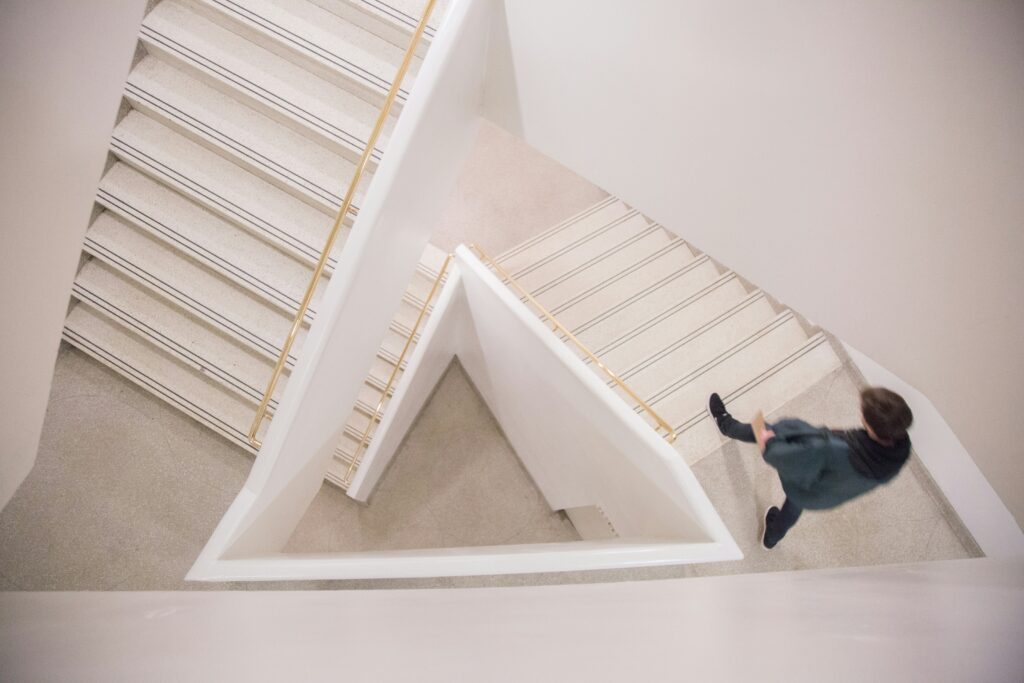
Going downstairs places significantly more force through the knee joint compared to walking on flat surfaces.
As you lower your body weight down each step, the knee has to absorb and control load through the quadriceps muscles, kneecap (patella), tendons, and surrounding cartilage. This creates higher compressive forces within the front of the knee.
If the knee is irritated, overloaded, stiff, or sensitive, these forces can provoke symptoms quite quickly.
Descending stairs also requires more control than going upstairs. The quadriceps muscles work eccentrically, meaning they lengthen while controlling movement. This increased muscular demand often exposes weaknesses, reduced load tolerance, or coordination issues around the knee and hip.
The Most Common Cause Why Knees Hurt: Patellofemoral Pain
One of the most common reasons people experience knee pain going downstairs is patellofemoral pain syndrome (PFPS), sometimes referred to as “runner’s knee.”
This condition involves irritation and increased sensitivity around the patellofemoral joint, which is where the kneecap slides against the thigh bone.
Typical symptoms include:
- Pain around or behind the kneecap
- Pain going downstairs
- Discomfort squatting or lunging
- Pain after prolonged sitting
- Aching during running or gym exercises
- Clicking or grinding sensations
Importantly, patellofemoral pain is often related to load tolerance rather than a structural “injury.” The knee may simply be struggling to tolerate the forces being placed through it.
This is why symptoms often fluctuate depending on activity levels, recovery, training loads, stress, and sleep.
Tendon Irritation Around the Knee
The tendons around the knee can also become irritated and painful under load.
This commonly affects:
- The patellar tendon
- Quadriceps tendon
- Pes anserine tendons
Tendon-related pain is often worse with:
- Stairs
- Jumping
- Running
- Squatting
- Gym training
- Sudden increases in activity
People frequently describe tendon pain as sharp during loading but easing once warmed up.
Knee Arthritis and Stair Pain

In some cases, knee pain going downstairs may relate to osteoarthritis. These can be considered ‘age-related’ changes, and can be incidental findings on scans.
Arthritic knees often become more sensitive to compressive loads and repeated bending movements. However, it is important to understand that arthritis exists on a spectrum and does not always correlate with pain severity.
Many people with mild arthritic changes experience significant pain, while others with more advanced changes function extremely well.
Common signs may include:
- Morning stiffness
- Reduced knee mobility
- Swelling
- Pain with prolonged walking
- Difficulty with stairs
- Stiffness after inactivity
Importantly, movement and strengthening are usually beneficial for arthritic knees rather than complete rest.
Weakness Higher Up the Chain Can Contribute
Knee pain is not always purely a knee problem.
Reduced strength or control around the hips, glutes, calves, and trunk can alter how force travels through the knee during walking and stair descent.
For example, poor hip control may increase stress through the front of the knee during single-leg loading tasks such as stairs.
This is one reason rehabilitation often focuses on improving overall lower limb strength and movement quality rather than treating the knee in isolation.
Why Online Self-Diagnosis Can Be Misleading
Many people searching “why do my knees hurt when going downstairs” worry they have torn cartilage, “bone-on-bone” arthritis, or permanent damage.
While structural injuries can occur, pain is often more closely related to irritation, sensitivity, and reduced load tolerance than severe tissue damage.
Scans can also be confusing. Age-related changes are extremely common and do not always explain symptoms.
Clinical assessment is usually more helpful than imaging alone because it looks at:
- Symptom behaviour
- Movement patterns
- Strength
- Load tolerance
- Joint mobility
- Contributing lifestyle factors

What Helps Knee Pain Going Downstairs?
Treatment depends on the underlying driver of symptoms, but common strategies include:
- Gradual strengthening exercises
- Improving hip and leg control
- Managing training loads
- Temporarily modifying aggravating activities
- Improving mobility
- Building tolerance to stairs progressively
In many cases, complete rest actually slows recovery. Most knees respond better to appropriately graded movement and strengthening.
Rehabilitation is usually about improving the knee’s ability to tolerate load rather than simply avoiding pain altogether. These more long term strategies will help answer “why do my knees hurt?”
When Should You Seek Assessment?
If your knee pain is:
- Persistently worsening
- Limiting daily activities
- Associated with swelling or instability
- Preventing exercise
- Lasting longer than several weeks
- Affecting your confidence with movement
then it is worth having the knee assessed properly.
A targeted assessment can help determine whether the primary driver is related to the kneecap, tendons, arthritis, strength deficits, or another contributing factor. Understanding what is actually driving symptoms is the first step toward reducing pain and getting back to moving confidently again. We hope this helps answer why knees hurt going downstairs.