

Can an Osteopath Help With Back Pain? What to Expect and When to Book
If you are considering seeing an osteopath for back pain, you are not alone. Osteopaths regularly assess, manage, and treat back pain using a combination of hands-on physical therapy, tailored exercise programs, and lifestyle advice. Most back pain improves significantly with the right care, moving you away from discomfort and back into the activities you love.
What Causes Back Pain?
Back pain is extremely common, but pinning down the exact cause can sometimes be tricky. Because the spine is a complex network of muscles, joints, ligaments, and nerves, irritation in one area can easily spread to another. Here are some of the most common drivers behind back pain:
1. Muscle Strain and Stiffness
Overusing a muscle, sudden awkward movements, or prolonged static postures can cause local muscle fibres to strain or spasm. This often feels like a deep ache or tight restriction across your lower or upper back.
2. Joint Irritation
The small facet joints that connect your vertebrae can become inflamed or irritated due to sudden awkward loading, repetitive strain, or age-related changes. This frequently causes sharp pain on movement or a restricted range of motion.
3. Disc-Related Pain
Intervertebral discs act as shock absorbers between your vertebrae. If a disc becomes irritated, bulges, or sustains micro-tears, it can trigger localised inflammation and severe pain, particularly when bending forward or sitting for long periods.
4. Sciatica and Nerve Pain
When nerves exiting the spine become compressed or irritated—often by a bulging disc or tight surrounding muscles—you may experience sharp, burning, or tingling pain traveling down into your glutes or leg.
5. Posture, Desk Work, and Lifestyle Factors
Spending long hours seated at a desk, low movement levels throughout the day, stress, and poor sleep quality can all increase sensitivity to pain and tension across your back muscles.
How Can an Osteopath Help With Back Pain?
Osteopathy takes a whole-body approach to musculoskeletal health. Instead of focusing solely on where it hurts, we look at how your entire body moves to address the root factors contributing to your pain.
Our 3-Step Approach to Back Pain:
-
Assessment: Identifying the root cause of your pain.
-
Hands-On Care: Targeted techniques for immediate relief and mobility.
-
Self-Management: Long-term exercises and ergonomic strategies to prevent recurrences
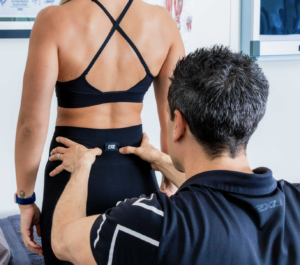
1. Assessment: Find What’s Driving Your Pain
Your session begins with a comprehensive physical assessment. We take a detailed medical history, evaluate your posture, analyse your spinal mobility, and conduct specific orthopaedic and neurological tests to identify the likely source of your discomfort.
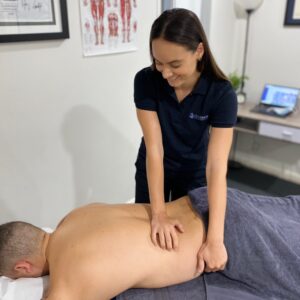
2. Hands-On Treatment
To help you move more freely, reduce your low back pain and get you back on track towards recovery, we utilise a variety of manual techniques customised to your comfort and condition:
-
Soft tissue massage: To ease muscle tension and improve local circulation.
-
Joint mobilisation: Gentle, rhythmic movements to restore normal joint motion.
-
Manipulation (HVLA): Precise, gentle joint adjustments where appropriate to improve mobility.
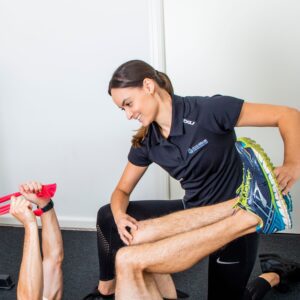
3. Exercise and Self-Management Advice
Hands-on care is only part of the equation. We prescribe targeted rehabilitation exercises, stretches, and movement strategies to strengthen your back and prevent future recurrences. Alongside movement, we evaluate your daily environment and routine, providing practical ergonomic guidance for your workspace and actionable advice on posture, sleep positions, stress management, and activity modifications to support your long-term recovery
Other Complementary Options
Where suitable, complementary techniques can be used alongside primary manual therapy and rehabilitation exercises to enhance recovery:
-
Dry needling: Incorporated to relieve stubborn myofascial trigger points and reduce localised pain sensitivity.
-
Supportive taping: Rigid or kinesiology taping can be applied to provide temporary postural support, relieve strain on irritated muscles and joints, or improve proprioceptive awareness.
What to Expect at Your First Appointment
How Long the Appointment Takes
Initial consultations typically last between 45 to 60 minutes. This gives us ample time to thoroughly assess your history and back, explain our findings, deliver hands-on treatment, and establish your management plan. Follow-up appointments are generally around 30 minutes.
What to Wear
Wear comfortable, loose-fitting clothing that allows you to move freely (such as shorts, leggings, or a t-shirt). You may be asked to remove outer layers of clothing so we can accurately assess your back and movement.
Your Treatment Plan
At the end of your initial session, we provide a clear diagnosis (or working hypothesis) and outline a customised treatment plan detailing expected recovery times, exercise goals, and suggested follow-up care.
How Many Sessions Will I Need for Back Pain?
The number of sessions required varies depending on several factors:
-
Whether the pain is acute (recent) or chronic (long-standing).
-
The underlying cause and severity of tissue irritation.
-
Your overall physical health, activity levels, and adherence to prescribed home exercises.
Acute back pain often shows marked improvement within 2 to 4 sessions, whereas chronic conditions may require a longer-term management plan. We continuously review your progress at every visit to ensure you are meeting your recovery milestones.
Should I Rest or Keep Moving With Back Pain?
One of the most common questions patients ask is whether they should stay in bed or stay active. Current clinical research, including from the World Health Organisation (WHO) on low back pain management, strongly support staying gently active rather than resting in bed.
Strict bed rest can actually prolong recovery, lead to muscle stiffness, and increase pain perception. While you should avoid heavy lifting or aggravating activities during an acute flare-up, gentle walking and light movement help promote tissue healing, reduce inflammation, and speed up your recovery.
Simple Things You Can Do at Home
Taking proactive steps at home can help manage your symptoms between osteopathic sessions:
1. Gentle Movement and Walking
Short, frequent walks on flat ground keep your spine lubricated and encourage blood circulation to healing tissues.
2. Heat Therapy
Applying a warm heat pack or hot water bottle to tight back muscles for 15–20 minutes can help ease muscle spasms and soothe aches.
3. Desk and Sleep Setup
-
Desk setup: Ensure your screen is at eye level, sit fully back in your chair, and take regular breaks every 30–45 minutes to change position.
-
Sleep setup: Try sleeping on your side with a pillow between your knees, or on your back with a pillow under your knees to take pressure off your lower back.
Osteopath, Physio, or Chiro for Back Pain?
Osteopaths focus on the interrelationship between your body’s structure and its function, using a hands-on, whole-body approach. When treating back pain, an osteopath doesn’t just look at the painful area; we assess how your entire musculoskeletal system, including your joints, muscles and ligaments, is moving and working together. Treatment typically combines soft tissue techniques, joint mobilisation, gentle adjustments, and tailored exercise and lifestyle advice to relieve pain, restore mobility, and promote your body’s natural capacity to heal.
While osteopaths, physiotherapists, and chiropractors are all primary healthcare practitioners qualified to assess and treat back pain, they differ in their core clinical philosophies and specific hands-on techniques. To learn more about these approaches and determine which practitioner is right for your needs, read our detailed guide on How to Choose Between an Osteo, Physio, and Chiro.
When Should You Seek Specialist Care?
While most back pain is benign and manageable with conservative care, certain symptoms require immediate medical evaluation by a doctor or hospital emergency department. Seek urgent medical attention if your back pain is accompanied by any of the following “red flag” symptoms:
-
Sudden loss of bowel or bladder control, or difficulty passing urine.
-
Numbness or pins and needles around your groin, buttocks, or genital region (saddle anesthesia).
-
Progressive weakness, clumsiness, or loss of feeling in both legs.
-
Unexplained weight loss, fever, or chills alongside back pain.
-
Pain following a high-impact trauma, such as a fall from height or a motor vehicle accident.
If you are experiencing any of these red flag symptoms, please present to your nearest hospital emergency department or consult a GP immediately. For more detailed clinical guidelines on identifying emergency back pain symptoms, visit Healthdirect Australia.
Frequently Asked Questions
Can an osteopath help with sciatica?
Yes. Osteopaths regularly treat sciatica and nerve-related leg pain. By identifying what is compressing or irritating the sciatic nerve, such as lumbar disc irritation or muscle tightness, we use targeted manual therapy, nerve-gliding techniques, and specific exercises to help relieve pain and improve nerve mobility.
Do I need a referral to see an osteopath for back pain?
No, you do not need a doctor’s referral to see an osteopath as a private patient. However, if you are eligible for care under a Chronic Disease Management (CDM) plan, a referral from your GP is required.
Can I claim osteopathy on private health or Medicare?
Yes. Most private health funds cover osteopathy under their extras policies (check with your provider for specific rebate amounts). Medicare rebates are available if your GP provides a referral under a Chronic Disease Management (CDM) plan.
Is it normal to feel sore after treatment?
Yes. It is completely normal to experience mild soreness, stiffness, or tenderness for 24 to 48 hours following a treatment session. This reaction is similar to the feeling after a new exercise session as your muscles and joints adapt to physical manipulation and movement.
How do I know if my back pain is serious?
Most back pain is mechanical and improves over time with gentle movement and conservative care. However, if your pain is relentless, unremitting at night, accompanied by systemically unwell feelings (like fever), or associated with nerve issues like progressive leg weakness or bladder dysfunction, it requires prompt medical evaluation.
Ready to find relief from back pain?
Don’t let low back stiffness or pain hold you back! Book your initial osteopathy appointment online TODAY, or reach out to our friendly team to discuss how we can support your recovery.